

In an era ruled by social media, where everything can be recorded and posted for all to judge, constant self-surveillance makes it difficult to be fully present in moments meant for carefree
enjoyment. This truth was painfully obvious to many at this year’s prom. As the dance floor stood almost empty, with students in their sparkling dresses and black tuxes scattered about, it was almost impossible not to wonder why no one wanted to have any fun.
Most students, like junior Lauren Eustermann, agree that this problem stems from social media. “I think surveillance, and social media especially, have influenced the way people act, like they’re more conscious of their actions…it’s a good and bad thing because people can be recorded committing crimes but overall it’s pretty weird to think about as a normal person,” Eustermann said.
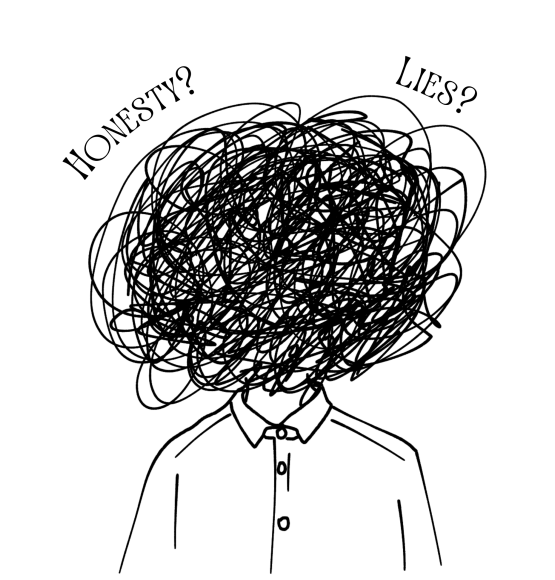
It is clear that mobile phones and social media have created a state of constant surveillance, where anyone could be watching or recording at any moment without one’s knowledge. According to The Guardian article, “What Does the Panopticon Mean in the Age of Digital Surveillance?,” written by Thomas McMullan, the concept of the “panopticon,” a prison design where inmates can constantly be watched by a guard but don’t know when they are being watched, explains this issue.
“In many ways, the watchtower at the heart of the panopticon is a precursor to the cameras fastened to our buildings – purposely visible machines with human eyes hidden from view,” McMullan wrote.
This intrusion is no longer limited to just institutions like prisons or security cameras meant for safety, as it has infected even everyday interactions due to the prevalence of recording others in public. As explained by Jason Okundaye’s article, “Why it’s Time to Stop Filming Strangers in Public for Social Media Thrills,” in The Guardian, “What’s going on is too often a kind of antisocial
behaviour: a rigorous policing of fun, spontaneity and expression, a disciplinary mechanism for social conformity.”
As a result, it is nearly impossible to exist in the moment while imagining oneself from an outside perspective. Junior Roxana Aryana believes that people are afraid of being watched, creating the need to always perform for the hidden cameras that we constantly imagine.
“I think that because people want to be socially accepted, they change themselves into what they believe people will like,” Aryana said.
Though this aspect of social media is clearly harmful, it is impossible to police everyone’s usage of it to end this problem. Thus, one must realize that sometimes simply facing the threat of potential embarrassment is essential to truly enjoying life, like senior Hailey Khetiya has done.
“It doesn’t really matter what other people think or what they perceive you to be like,” Khetiya said. “I think that social media should be a place where you can be your authentic self without fearing how other people will view you.”
By staying on the sidelines out of fear and constantly imagining what others may see, we rob ourselves of genuine expression and experience. As explained by Savannah Ford’s article, “Why
You Should Put Yourself in Embarrassing Situations” in the Baylor Lariat, “Practicing embarrassment trains you to stop running from awkwardness and instead realize you can survive it…You stop worrying so much about what people think because you’ve learned firsthand that the world doesn’t end when you mess up.”
Looking back to the empty, slightly awkward prom, the issue was never that students didn’t want to dance. Understandably, the main obstacle was that most simply didn’t want to take the risk of having an embarrassing moment analyzed. On a night meant to be free from responsibility and expectation, often the most fun can be found by accepting vulnerability rather than running from it.
As actor Austin Butler recently said on a viral TikTok, “Embarrassment is an underexplored emotion…go out there and make a fool of yourself.”