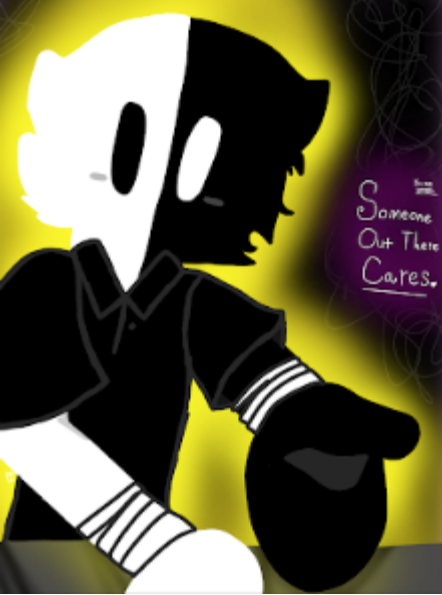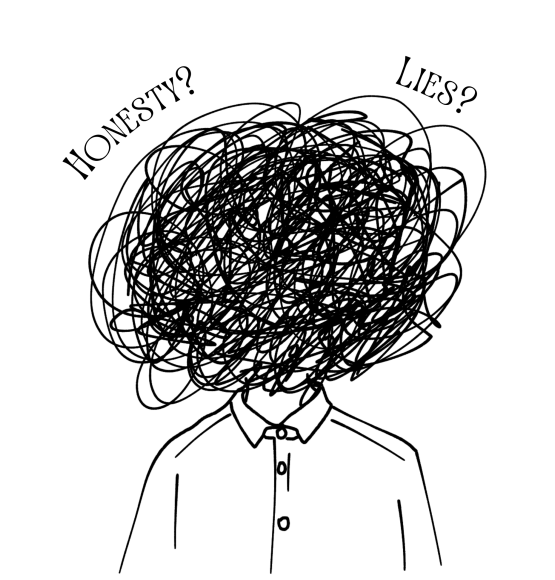
Starving artists, “unpractical” degrees, a lack of jobs, the takeover of AI: people appear to have countless ways to discourage students’ ambitions. In a moment when jobs in technology and scientific innovation seem to overshadow everything, many have forgotten the merits of the arts and humanities, misunderstanding the potential of these careers in a way which harms students–who are encouraged to give up on their goals and choose careers they aren’t passionate about– and society as a whole.
With the nation’s current affordability crisis, the lack of entry level jobs, and the possibility of AI completely taking over certain careers, high school students have countless difficult circumstances to consider when thinking about their future. According to the ABC News Article, “Why is it hard to find a job right now? Experts weigh in,” Max Zahn explains these struggles. “While the unemployment rate stands at a historically low level, millions of out-of-work Americans face stiff conditions…at the same time, worker confidence in their ability to find a new job has hit a record low,” Zahn wrote.
Due to this, teachers and parents often push students towards paths that they see as more stable with higher wages, more often than not only including jobs in STEM. These careers are frequently discussed in math and science classes, while students often don’t know many of the possible opportunities within the arts and humanities. Countless programs encourage students to learn mathematical and scientific skills, like coding, engineering, and much more. Though it is extremely beneficial for students to learn about these concepts–and the programs have uplifted many minority students–they should be matched with an equal push towards other fields.
This trend has not gone unnoticed by students interested in the arts and humanities, like junior Summer De Alba. “ I have felt discouraged from pursuing humanities…by peers and the school…out of concern regarding the ‘usefulness’ of certain undergraduate degrees,” De Alba said. “I noticed that when people talk about the ‘most useful’ job paths or degrees, it’s almost always STEM related.”
Additionally, according to the City of Irvine, 70% of its residents have a bachelor’s degree or higher and often work within scientific fields. In a city such as this one, with so many individuals who have followed this path, it is understandable that families would want a similar future for their children. Their main concern is that their child succeeds professionally and prospers.
But, what these factors lead to is a lack of career exploration, as students dismiss their interests as impossible to succeed in or disappointing to their families. Or, worst of all, they are completely unaware of the opportunities that exist, due to a lack of exposure. If a student truly loves the arts or humanities, there is no reason they should be forced into a career they have no interest in and would grow to hate.
Furthermore, as Annette Jacobson’s article in PBS News, “Why we shouldn’t push students to specialize in STEM too early” she argued that students shouldn’t see STEM as their only option and feel pressure to decide too soon. “[It sends] the message that the best way to succeed in life is to stick to a single path, rather than allowing yourself to grow and change in the face of new experiences,” Jacobson wrote.
All of these factors lead to students feeling that a career in the arts or humanities is unrealistic or completely impossible. But, countless young people, like Woodbridge High alumni Zach Vu, have overcome these doubts. “I’ve always felt discouraged, no matter what space I was in, even though I was good at [music],” Vu said. “It was still a preconception that it’s a competitive field, discouraging from doing things I did…[and] the pressure of finding a job that some people consider actually matters in society, rather than an artistic one.”
However, there is hope financially, according to the Research.com article “2026 What Can You Do With a Humanities Degree,” by Imed Bouchrika. He stated that 70% of humanities graduates have high levels of job satisfaction.
Likewise, it is also completely possible to succeed in the arts, which are infamous for being competitive. The Strategic National Arts Alumni Project found from its 2022 survey that 87% of “alumni of post secondary arts, design, and adjacent programs” are in the workforce and 75% of them have art or design related jobs.
Not only are the arts and humanities important for those who want to pursue them, they are extremely important to society. They allow people to express themselves, understand and appreciate different cultures, document experiences, think critically, create change in the world, and much more. Most importantly, they highlight abilities which define humanity, like empathy and creativity.
At this moment in history this is more important than ever, both in general and in the job market. In UC Irvine’s official newspaper, The New University, Deanza Jayaputri Andriansyah discussed the importance of this in her article, “The undervalued humanities.” “As AI takes over technical and repetitive tasks, the skills associated with the humanities have become increasingly valuable,” Andriansyah wrote. “From emotional intelligence to critical thinking, these are the very strengths that make us uniquely human.”
To alleviate this issue, many students, like junior Zach Hufford, agree schools and families can simply support their students through all their passions, without pressuring them to decide on a specific career too soon. “Having more support at the beginning of my music career, even when I didn’t sound good, would’ve helped push me further and faster into my music career since the very beginning, which is something a lot of us struggle on,” Hufford said.
Further, schools can take a more systematic approach to expand students’ awareness of the vast options for their future. “I think WHS can have more career workshops about humanities-based careers,” De Alba said. “And also emphasize the importance and demands for jobs in humanities.”
But, more than anything, students can choose to believe and invest in themselves, despite the challenges or the opinions of others. “Never get discouraged towards the things you love,” Vu said. “People may say so many things, but do…what works for you. Don’t feel pressured out of it [because] the time you take doing the things you love, the better you get.”