

On January 21, Woodbridge High staff gathered to participate in an annual Local Control and Accountability Plan survey to align budget expenditures for the school year. The survey was used to discover where more funds are needed and what any extra funds could go towards.
Irvine Unified School District (IUSD) director of fiscal services, Laurie Serich-Lundquist, explained the amount of money each school receives.
“The main budgetary expenditures for the District’s unrestricted general fund are salaries and benefits for staff,” Serich-Lundquist said.
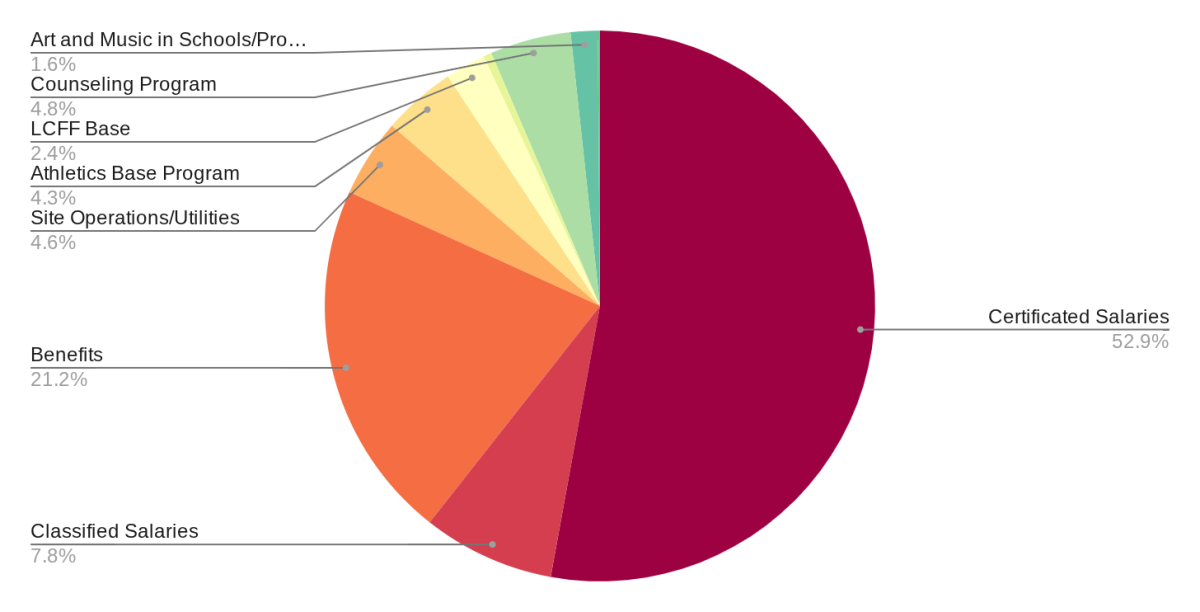
At Woodbridge High, certificated salaries, those requiring an advanced degree, make up 52.87% of the available budget. Classified salaries, non-teaching roles, take up 7.76%, adding to 60.63% total for salaries.
Following staffing costs, student expenditures make up a significant portion. According to IUSD’s 2025 School Accountability Report Card (SARC), on average, $8,281 is spent on each pupil. With 2,232 students in the 2024-25 year, the total amount invested comes to around $18.5 million for Woodbridge High. However, the money allotted for student expenditures can vary.
“Sites are allocated funds based on the [enrollment]…” Serich-Lunquist said. Meaning that, depending on whether student enrollment drops or rises, schools receive different amounts of funding each year.
In addition to enrollment variations, budgets for student expenditures depend on the types of classes offered at the school site and based on the classes offered, schools may be eligible to receive state grants or scholarships.
High schools sometimes have access toCTE [Career Technical Education] or dual enrollment-type grants from the state,” Serich-Lunquist said.
Dual enrollment and CTE offer opportunities to explore career pathways with hands-on learning experiences and prepare students for industry-specific skills. Courses like Makerspace and more are examples of CTE courses currently offered at Woodbridge High, with many of them receiving funding from grants and scholarships.
While IUSD primarily covers staffing costs, courses and student expenditures, it also covers costs for extracurricular activities. For example, some funding from the district supports the athletic base program, including basic supplies, athletic trainers, referees and more.
Due to Proposition 28, the visual and performing arts also get a boost. The Arts and Music in Schools. The Funding Guarantee and Accountability Act required the state to establish a new, ongoing program to support arts instruction in schools since 2023–24.
“The district receives state and local grants that also support art/music… the individual school sites, with their discretionary funds, will also allocate money to those areas,” Serich-Lundquist said.
At Woodbridge High, 1.59% of the budget goes towards the arts, while 4.32% is allotted for athletics.
Outside of the overall budget, additional funds can be distributed for campus improvement. In 2016, Irvine voters passed Measure E to ensure students have access to modernized learning environments and new technology to better prepare them for life after college. Measure E provided the school with 319 million dollars to spend on facilities. This money went towards the construction of a new performing arts center and synthetic track at Woodbridge High, completed in 2020.
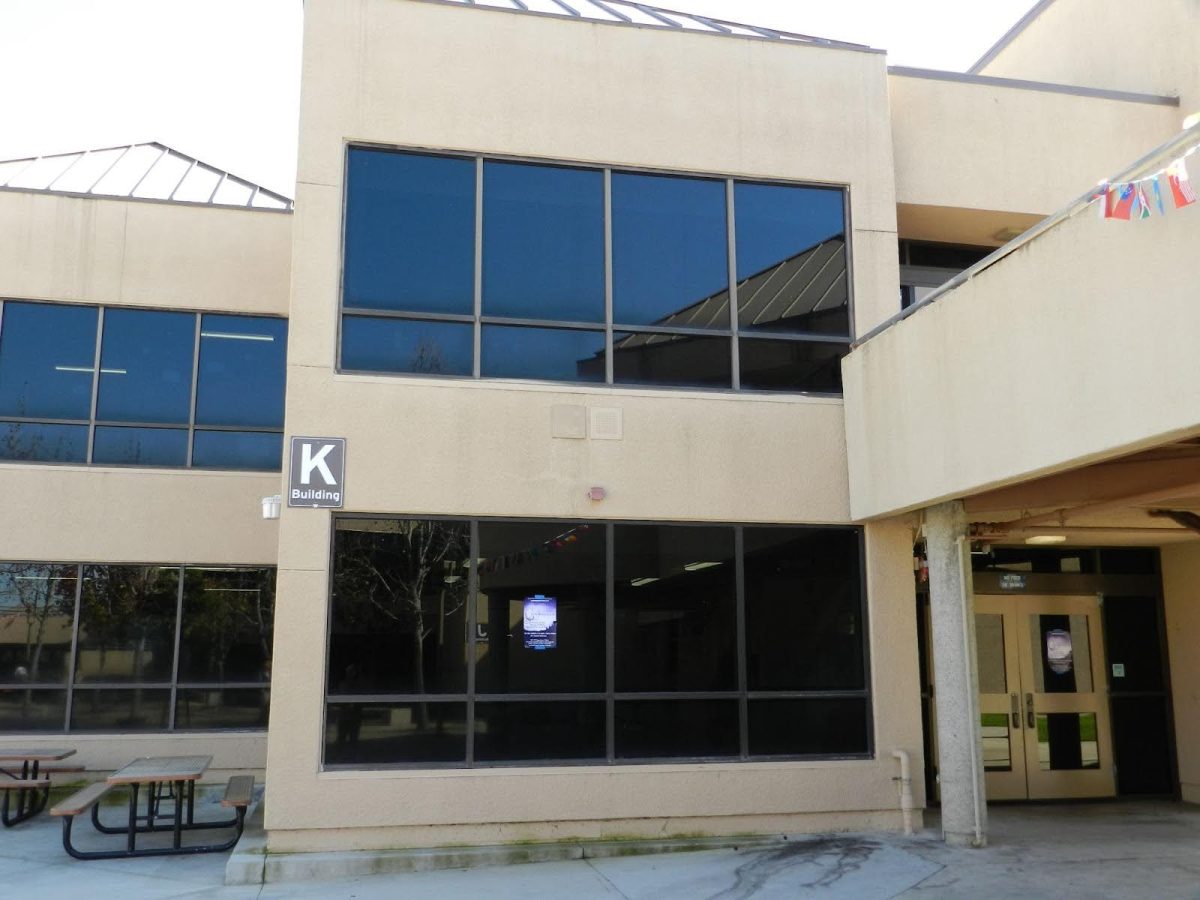
According to the 2025 SARC, additional Measure E funding will be used during the 2026-2027 school year to modernize Buildings J and K to improve learning environments at Woodbridge High. Anything not covered by state or district funding can be funded through outside organizations.
For more information, look for the most recent Woodbridge High School Accountability Report Card.