


When teachers announce a new group project, many students don’t celebrate, instead they groan. All the promises they make at the start of the project teamwork, collaboration and communication go down the drain as the project advances towards its deadline. By the end, students have lost motivation, leaving their work for someone else to complete, making group projects the most despised part of school.
To many students, these frustrations are all too familiar in their classes and groups on campus, feeling forced into an inefficient form of collaboration.
“I would say I’m leaning towards against group work,” senior Yuki Matsumura said. “There are definitely times where I do prefer…individual work.”
This sentiment is shared by many others at Woodbridge High, seeing group work as something that creates an unfair environment.
“I don’t really like how in group work, people could just help the other person and the other person can’t learn from that,” freshman Kameron Vo said.
Group work opens up the possibility that no real learning is completed by some members in a group, more so than if the assignment was an individual project; making this just one of the many reasons students are reluctant to do group work. A big part of this frustration on anything and are simply too lazy to do the work themselves. The result is less progress on the assignment and more concern over logistics, leaving groups scrambling to catch up as getting lazy is what makes group work so difficult. The people deadlines who want a good grade will be the ones who take the lead and ultimately become frustrated because while they try to finish their work, their group mates slack off making it impossible to get anything done. Some attempt to claim that group work fosters community, but in reality most students can attest to the opposite, experiencing division, frustration and wasted effort. is not just the work itself – it’s how the groups are formed.
Being stuck with new people and not being able to communicate leads to even more stress. When getting assigned to a group, students are forced to collaborate and coordinate work with teenagers who can’t agree on anything and are simply too lazy to do the work themselves. The result is less progress on the assignment and more concern over logistics, leaving groups scrambling to catch up as deadlines approach.
In many projects, hard working students get paired with someone who avoids doing work, leading to a possible poor grade on a project. Thus, by having the flexibility to choose partners, or work individually, students are able to create a group of people who match their level of work ethic.
Having teachers assign groups and working with new people requires students to create new group dynamics and assign responsibility, in addition to completing the project. With all the energy and valuable time wasted arguing over who will do what in the assignment, the due date rapidly approaches, leaving students to scramble and hastily put together something to turn in.
No matter how amazing a group is at working together, everyone is still concerned about their grades. There is always the fear that the grade will depend on the entire group’s effort and ‘what if someone doesn’t do their work?’
“A lot of the times it might be one or two people taking the lead with the rest of the project members not being as communicative or as serious about the project,” Matsumura said.
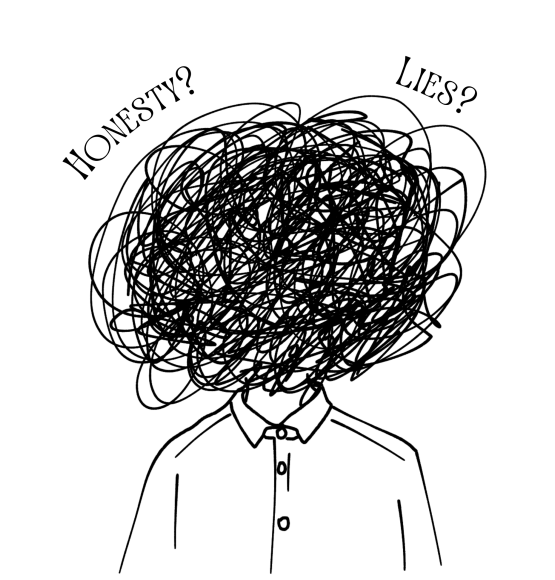
This concern about some taking the lead and others getting lazy is what makes group work so difficult. The people who want a good grade will be the ones who take the lead and ultimately become frustrated because while they try to finish their work, their group mates slack off making it impossible to get anything done.
Some attempt to claim that group work fosters community, but in reality most students can attest to the opposite, experiencing division, frustration and wasted effort.
“It really helps to foster sort of a community,” Junior Haran Gunabalasubramaniam said.
Yet for most students, this is an unrealistic outcome; instead they are weighed down by the stress and unequal work of a group project, preventing them from actually building meaningful connections.
Although group work is designed to increase communication, create a collaborative environment and grow leadership skills, ultimately it fails to do so in most cases, turning an individual project that could be finished in less than a day into a monthlong group assignment filled with constant disagreements and many off-topic conversations between group mates.
In the end, group projects are less about learning and more about surviving, they don’t build teamwork, instead they destroy it, leaving students stressed, divided and wishing they could just work alone.
It was a cool, fall morning with a fine mist in the air and the smell of damp leaves. Students sleepily ambled into their first period classrooms,when to their dismay, they saw their normal rows of desks placed in grouped tables. Some students cheered, others groaned. Today, students would be asked to engage in group work.
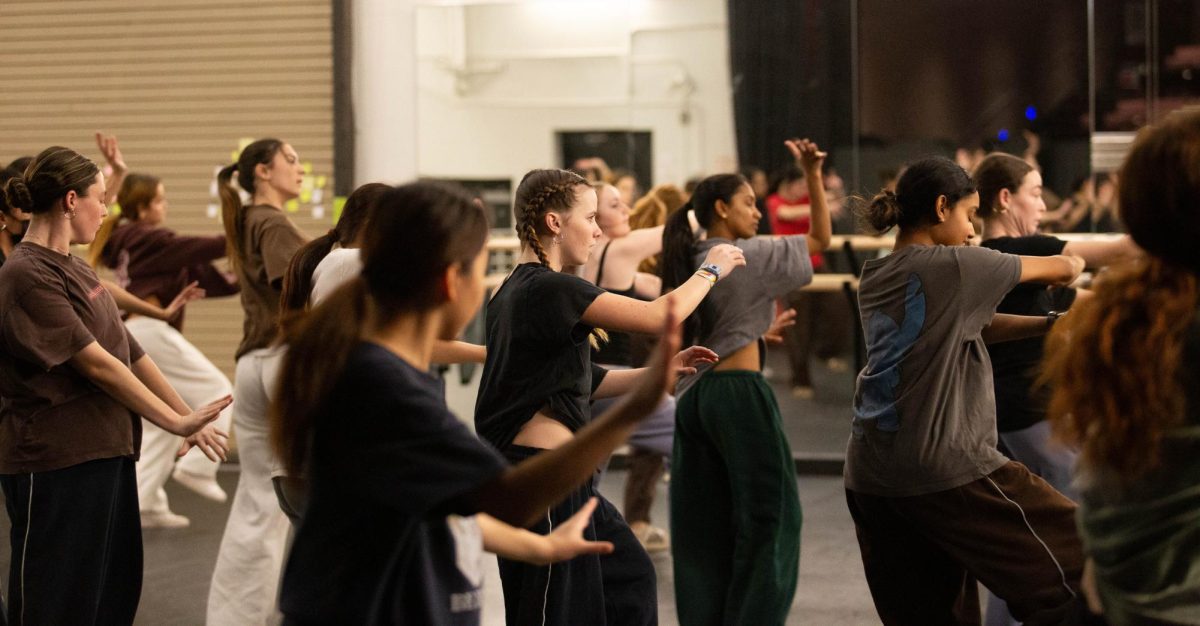
The idea of working together with their peers, group work and group discussion is carefully crafted by teachers to support the development of their students and build community in their classroom. The skills and experiences students gain from engaging in group tasks are skills that they will be able to take with them into any future path in life.
In the current climate, artificial intelligence (AI) is taking a larger role in daily life, like data interpretation and concept generation to creating art and entertainment. However, more recently, teenagers are turning to AI for advice, companionship and problem solving. As such, teenagers are losing valuable communication skills with their peers, the loss of which could be highly detrimental.
“With AI, there is no longer a use for human skills…you have to go beyond the machine at this point…that’s going to make you special and valuable to your employer. Your ability to be human,” science teacher and department co-chair Adam Atallah said.
Engaging in these group discussions about what students are learning encourages them to see the value in their own creativity, humanity and differing perspectives. This is especially true in literature classes, where students are often asked to interpret moments from a text.
“I think that group work allows kids to see different interpretations of literature since we don’t always read things the same way. They can see who has more logical conclusions,” English teacher Jessica Lopez said.
Group work teaches students to begin to look for future connections, patterns and nuances in their ideas and the ideas of others – something that AI could never teach them to do. Some students argue that group work can often be unfair. There are many instances where conflict arises in groups, namely when not all students are contributing equally to the tasks or because some students have specific expectations of group work and the final product’s appearance.
“Sometimes, I have students who are so motivated or hyperfocused and can be too controlling or bossy…[In class we] explicitly talk about differences in personality [and how to address those conflicts],” Lopez said.
In places where conflict doesn’t arise, other groups struggle to collaborate effectively due to their discomfort with their group members.
“Students are reluctant to talk to people that they might not know well or [are] just reluctant to talk in general,” math teacher Christy Sterner said. “In the past few years, students seem hesitant to just try something in the attempt to solve a problem.”
Learning how to respectfully resolve conflicts while working towards a common goal will not only create better relationships between students but will also teach them how to communicate with others that don’t share the same views in the future.
“[It is important that students learn to work] with others in a productive way… Productive struggle is not a bad thing, but just something to persevere through,” Sterner added. “Some of the time, you just have to start and try; maybe that first try will not work out but you can always erase and start again.”
While group tasks encourage students to see from different perspectives and learn to solve problems together, the most important outcome of students engaging in group work is much more subtle.
“[A school] is like the town square. This is the place where all of the kids go and see each other and interact and [become connected] to so many more people… And I feel like the idea of group projects is one more brick in this wall of building community. It’s like one small piece on a larger scale,” Atallah said.
Students should see group tasks as opportunities to genuinely connect with their peers, to grow and challenge their thinking and to continue to build the positive and welcoming community that Woodbridge High is best known for.
Your donation will support the student journalists of Woodbridge High School. Your contribution will allow us to purchase equipment and cover our annual website hosting costs.